Brian Dai
Mathematics
GOING BACK IN TIME
Who were some of the most famous mathematicians in the world and what did they do?
Mathematics is a part of our everyday lives. The clock we read, the money we use, and even the ground we walk on every day, had something to do with math. It is the language of our universe; with it, we can make sense of the world around us. It has been part of human history since forever, and will continue to be.
Let me take you back to when humans exceeded their limits. There were times when great minds discovered major concepts and knowledge that we still use, teach, and learn today.
Albert Eistein (1879-1955)
Date and Place of Birth: March 14, 1879, in Ulm, Kingdom of Württemberg. German Empire
Date and Place of Death: April 18, 1955 (age 76), in Princeton, New Jersey
Nationality: German
Awards: Nobel Prize in Physic (1921), Time Magazine's Person of the Century (1999)
Family: 2 sons, 1 daughter with Mileva Maric (married in 1903, divorced in 1919), Elsa Löwenthal (married in the same year)
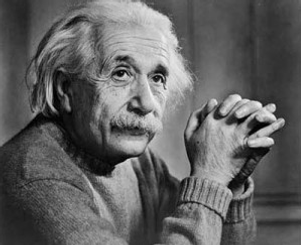
Albert Einstein was an extremely well-known physicist whom contributed largely to the mathematics, physics, and sciences fields. He is remembered for his theories on nuclear power and concepts about light, also known as quantum mechanics.
Einstein's Theory of Relativity: completed in 1915, describes the theory of nuclear energy and power. According to Einstein, there is a similarity between energy and mass, so that both neutrons and protons have a lot of energy when split up. The mass defect describes this kind of energy.
Einstein Field Equations: 10 equations having to do with calculus and geometry. Published in 1915, one of the equations demonstrates how stress-energy inflicts curvature of space-time.
Early 20th Century: Einstein became famous. He received awards in the fields of medicine, science, philosophy, ad more from a variety of universities around the globe. He would tour the world with reporters following wherever he went.
E = mc^2: the equation he is best known for. Describes that energy and mass (matter) are the same thing in different forms.
Nobel Prize for Physics in 1921: discovery of the photoelectric effect.
Isaac Newton (1642-1727)
Date and Place of Birth: Dec 25, 1642, in Woolsthorpe-by-Colsterworth, Lincolnshire, England
Date and Place of Death: March 20, 1727 (age 84), in Kensington, Middlesex, England, Great Britain
Nationality: English
Known for: Newton's method for estimating roots of functions
Family: unmarried, no children

Isaac Newton is one of the most well-known mathematicians and physicians in the world. He is best known for his discovery of gravity, and is still extremely influential in today's studies. He spent is last years studying and writing about religion and alchemy, but struggled financially near the end.
Achievements and Discoveries in University: he studied at Trinity College in Cambridge. During this time, he discovered the generalized binomial theorem.
Fun Facts: he loved astronomy and spent a lot of his university life learning about famous astronomers. He was also not considered a good student at school. After graduation, he spent his spent studying physics, calculus, and gravity by himself.
The Principia: published his work which focuses on infinitesimal calculus in geometric form. He also worked on cubicle curves alongside with the Euclidean plane, which was quite unusual for his time.
Lucasian Professor of Mathematics (1669): he earned this title by himself and the work he had put in in his work. Traditionally, people with this title would become a priest, but Newton was made an exception.
Other Discoveries: optics, the theory of finite differences, several innovative applications in geometry
Newton paved the road for many other famous mathematicians in the future, like Albert Einstein, to continue his work. With him being the foundation, others have made major discoveries and contributions to math and science.
Ada Lovelace (1815-1852)
Date and Place of Birth: Dec 10, 1815, in London, England
Date and Place of Death: Nov 27, 1852 (age 36), in Marylebone, London, England
Nationality: British
Known for: being considered the world's first computer programmer
Family: Lord Byron (father), Annabella Milbanke Byron (mother), William King (married), 3 children (King)

Ada Lovelace was a child prodigy passionate about science, its developments, mathematics, including computational mathematics, from a very young age. Being only 13 years old, she had already developed a design for a flying machine.
Charles Babbage & Babbage's Analytical Engine: they met when Lovelace was only 17, in 1833. They became friends and collaborators, and worked together on the Babbage's Analytical Engine, which was a mechanical general-purpose computer developed in 1837. She was introduced to him by Mary Somerville, her respected tutor.
Lovelace would translate works for Babbage's engine.
Notes: her creation of a mathematical model named "calculus of the nervous system." Achievements throughout her entire career and life are documented in her annotations "Notes." Her work were used to make future advancements and developments in computer science.
In Notes, Lovelace also included important information about the Analytical Engine and how it could be the foundation for a computer.
More on Lovelace's Education: Lovelace's mother, Annabella, urged her to study logic and mathematics. Annabella also considered Ada's father's work as insane, there encouraging Ada to not head in that direction. At the University of London, Augustus de Morgan was her math professor, who also helped her a great deal in her career.
Sophie Germain (1776-1831)
Date and Place of Birth: April 1, 1776, in Rue Saint-Denis, Paris, France
Date and Place of Death: June 27, 1831 (age 55), in Paris, France
Nationality: French
Known for: formulating Sophie Germain's theorem
Family: Ambroise-Francois (father)

Sophie Germain, full name Marie Sophie Germain, was a philosopher, physicist, and mathematician. At the time when she lived, there were a lot of disapproval for her from her family and the people around her just because of her gender. Because of this, her career never formed, so she studied and worked independently. Surprisingly, she was able to educate herself from books in her father's library.
How Sophie picked up mathematics: she was 13 when the Bastille fell, trapping her indoors. Because she was bored, she taught herself math, Latin, and Greek using the books in her father's library. This was not supported by her parents, but she was determined and still kept studying.
After Sophie taught herself Latin and Greek, she was able to read the works of Leonhard Euler and Isaac Newton.
Formal education: Sophie was forbidden to enrol in Ecole Polytechnique, a school that opened in 1794. This, too, did not stop her from studying. She managed to obtain lecture notes and was able to hand in her work to a faculty member, Joseph Louis Lagrange, at the school.
Elasticity: the Paris Academy of Sciences sponsored contests about Ernst Chladni's experiments on vibrating metal plates. Sophie was interested, so she joined three times and finally won on the third try. This resulted her being the first woman to win the prize.
Other interests: Sophie was often exposed to philosophy and politics because of her father being a representative of bourgeoisie to Etats-Generaux. In 1789, she became interested in number theory after studying by herself about other people's works. She was motivated again when a prize was offered for a proof of Fermat's Last Theorem. She wrote a letter which contained proof and progress that was actually significant in 200 years. However, her letter was never replied to.
Sophie also published works on philosophy, psychology, and sociology.
Sophie's final years: despite having cancer, Sophie still continued working. This yielded massive results in elasticity and some of its laws. All of her studies were published, which showed how interested she was in the subject.
Sophie Germain faced extreme discrimination and prejudice because of her gender that refrained her from pursuing the field of studies she likes. Even though people tried to stop her, she still managed to rise and contribute hugely to the world of science. She didn't let it affect her--instead, she showed us just how powerful passion can be.
These four, and hundreds more, have shaped the world we know today. To this day, we learn, experiment, and build on the work our ancestors founded. After all, math is the language of the universe. Humans will forever find ways to get to know the world that we live on, and unknown wonders and discoveries are still waiting to be found by us.
All of the information on this page is from:
https://famous-mathematicians.org/
https://www.newyorker.com/tech/annals-of-technology/ada-lovelace-the-first-tech-visionary
https://mathshistory.st-andrews.ac.uk/Biographies/Germain/
How can you help the development of mathematics? If you are interested, feel free to check out another article on this website: What Lies Ahead? Math Studies, Careers, and Your Very Own Future.